flying fish
Flying fish are a recurring presence in The Old Man and the Sea, serving as both a practical resource and a symbolic touchstone for Santiago. They are among the creatures he considers his "principal friends on the ocean," and their appearances mark key moments of sustenance, observation, and reflection during his ordeal.
Role as Sustenance and Bait
Santiago's relationship with flying fish is partly practical. When he guts a dolphin he has caught, he finds two fresh, hard flying fish inside its maw; he lays them aside and later eats one of them, gutted and with its head cut off, as part of his meager meal under the stars. He notes that a flying fish is "excellent to eat raw" and that he would not have to cut it up, though he lacks a light to attract them at night. Earlier, when he hooks a dolphin, flying fish burst from the water in desperation, and Santiago observes that they are "too big" for the man-of-war bird that tries to catch them and "go too fast." The flying fish also serve as bait for larger predators: Santiago sees them spurting out of the water and knows that dolphin are following them, and he later uses a sardine—a smaller bait fish—to try to catch a dolphin for food.
Companions and Brothers of the Sea
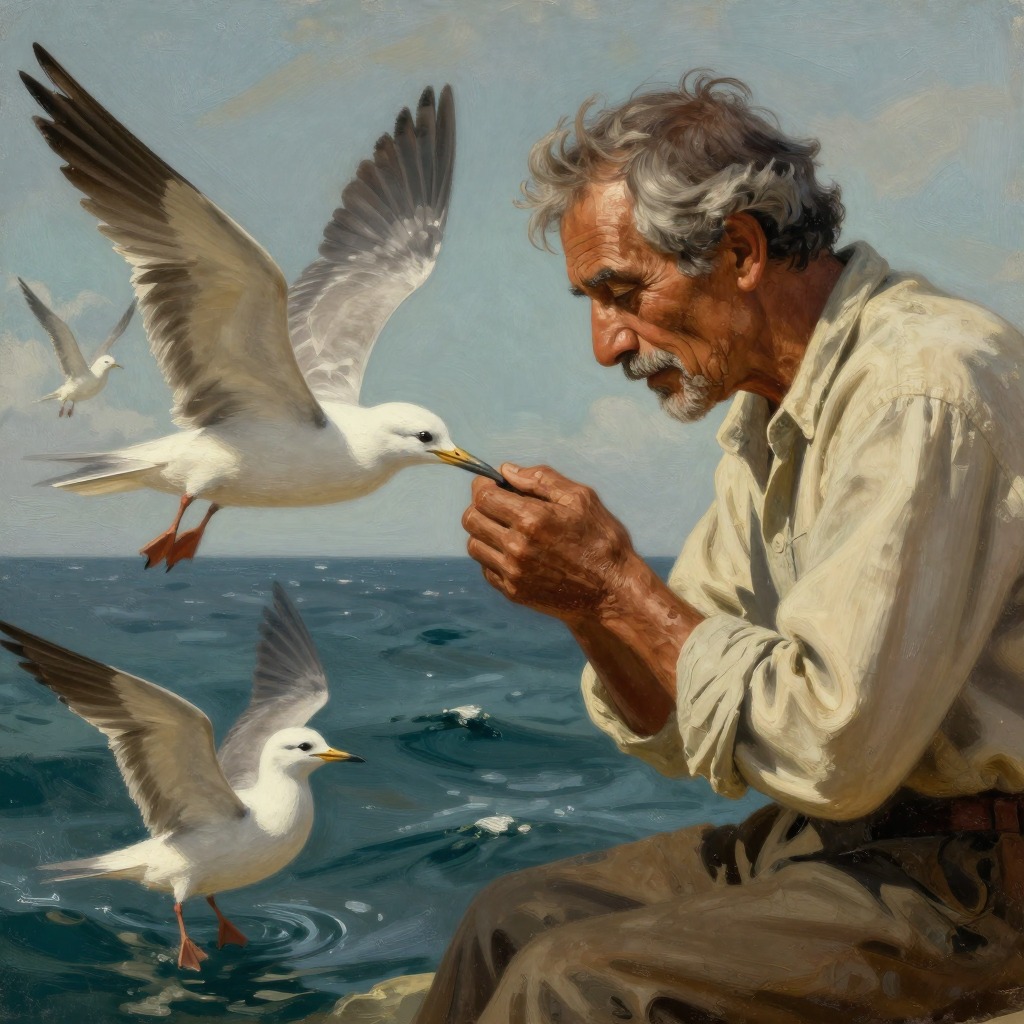
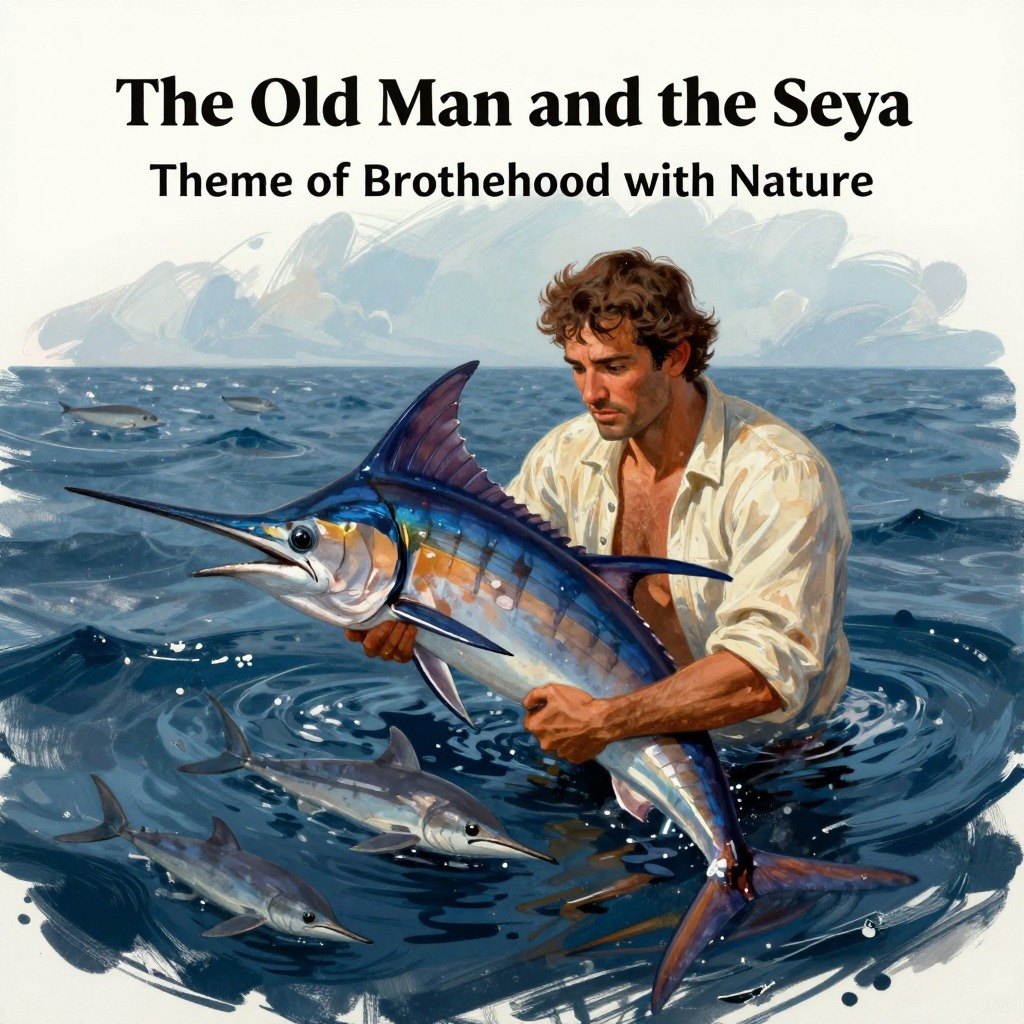
Beyond their practical use, flying fish embody the kinship Santiago feels with all creatures of the ocean. He is "very fond" of them and calls them his "principal friends on the sea." He groups them with porpoises as "our brothers," creatures that "play and make jokes and love one another." This sense of brotherhood extends to the marlin he hunts and even to the sharks he fights, but the flying fish are unique in being consistently harmless and beautiful, never threatening him. They appear at moments of solitude, such as when Santiago, sailing home with the marlin lashed to his skiff, sees flying fish bursting from the water ahead of his bow and sailing away to either side, a sight that accompanies his weary return.
Indicators of the Sea's Life and Mood
Santiago reads the behavior of flying fish as signs of the ocean's activity. When a man-of-war bird dives, Santiago sees flying fish spurt out and knows that dolphin are below. The presence of many flying fish leads him to conclude that dolphin should be nearby. At night, the phosphorescence of the Gulf weed—which flying fish sometimes disturb—helps him gauge the boat's movement. The flying fish are part of the living texture of the sea, along with the plankton, the Sargasso weed, and the Portuguese men-of-war, and Santiago's attention to them reflects his deep, intuitive knowledge of the marine world.
Contrast with the Marlin and the Sharks
The flying fish stand in contrast to the great marlin and the predatory sharks. Where the marlin is a noble adversary and the sharks are destructive enemies, the flying fish are innocent, fragile, and fleeting. Santiago pities the small, delicate terns that hunt them, thinking that the ocean is too cruel for such fine birds, and the flying fish themselves are often victims—of dolphin, of birds, and of the larger cycle of predation. Yet they also represent resilience and abundance: they appear in schools, leaping and gliding, and their presence reassures Santiago that the sea is alive and generous. After the sharks have destroyed the marlin, the flying fish continue to appear, a reminder that the ocean's life goes on beyond Santiago's personal tragedy.
The Flying Fish as a Link to Memory and Loss
Santiago's fondness for flying fish connects to his broader nostalgia and his sense of a lost, simpler world. He remembers the time when he and the boy Manolin fished together, and the flying fish are part of that shared memory. When he is alone, he talks to the flying fish as he talks to the birds and the porpoises, filling the silence of his solitary voyage. The flying fish also appear in the context of the boy's absence: Santiago wishes the boy were there to see the flying fish and to share the experience. In this way, the flying fish become a thread linking Santiago's past companionship with his present endurance, and they remain with him until the very end of his journey, when he sails into the harbor with the marlin's skeleton and the flying fish still leaping ahead of his bow.